Est. 1977 · 49 Years of Built Infrastructure
Bengaluru Origins · National Benchmark
The 49-Year Chronicle:
From Timber Pandals to Aerospace-Grade German Hangars.
Founded in Bengaluru in 1977, Raja Enterprises pioneered the transformation of South Indian event infrastructure. Trace the four-decade evolution from local civic convocations to multi-acre clear-span pop-up cities for heads of state.
1977
5th Main Road, Bengaluru
1991
Direct German asset moat
In house
Permanent payroll crew
ZERO
49-year unbroken safety record
Chapter 01: 1977
The Bengaluru Genesis.
Founded on 5th Main Road.
In 1977, Bengaluru was a tranquil garden city of universities, public sector enterprises, and burgeoning civic life. Recognizing that major state functions, academic convocations, and political gatherings lacked disciplined physical infrastructure contractors, Raja Enterprises was founded at #145, 5th Main Road.
Starting with traditional timber poles, bamboo framework lattices, and durable cotton shamianas, Raju and Venkat established a single non-negotiable principle that would define the company for the next half-century: A contractor’s word is an inviolable bond. If the stage is promised for 8:00 AM, it is structurally complete and inspected by 2:00 AM.
Original Headquarters
#145, 5th Main Road, Bengaluru-18
Early Mandates
Civic Convocations & State Daises
Building the Physical Ground for Karnataka’s Early Civic Life
Establishing the operational standards that earned the trust of state departments and public institutions.
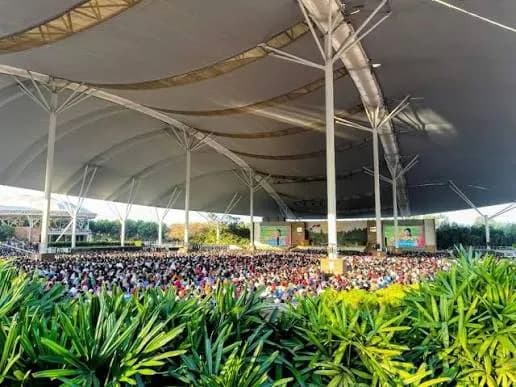
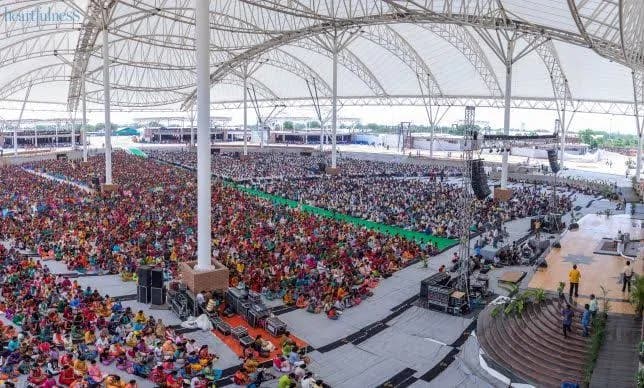
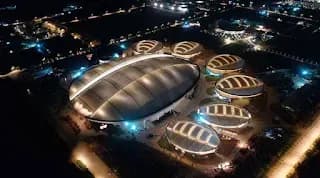
The Transition to Clear-Span Modular Aerospace Aluminium
Investing in first-party German hangar assets to eliminate sub-rental middlemen and guarantee structural safety.
Chapter 02: 1991 Pivot
The Asset Moat.
Direct Ownership of German Engineering.
When India initiated economic liberalization in 1991, Bengaluru rapidly emerged as the nation’s technology capital. International delegations, multinational IT conglomerates, and large industrial expos demanded infrastructure that met European safety and aesthetic criteria.
While other event companies chose the broker model—renting disparate components from fragmented third parties—Raja Enterprises made a monumental capital commitment: directly acquiring industrial-scale German clear-span aluminium hangars and constructing our own staging and flooring production yards.
Strategic Decision
100% Direct First-Party Asset Ownership
Market Outcome
Largest Turnkey Infrastructure Contractor in Karnataka
Chapter 03: Evolution of the Craft
The Technological Leap.
Then vs. Now Across Four Decades.
How Indian event engineering evolved from temporary artisanal shamianas into high-precision modular structural civil engineering.
1970s: Timber Posts & Bamboo Lattices
Manual rope lashing and eucalyptus poles requiring dense interior support columns every 15 feet.
2020s: Aerospace-Grade 6061-T6 Aluminium
German-engineered modular clear spans, column-free across the full floor plate, engineered for monsoon wind loading.
1970s: Cotton Canvas Shamianas
Permeable canvas tarpaulins susceptible to water pooling, wind billow, and fire hazards.
2020s: Flame-Retardant Coated PVC
Blackout PVC-coated membranes with integrated aluminium rainwater gutters and thermal roof lining.
1970s: Manual Timber Planking
Direct ground contact with uneven wooden planks vulnerable to mud seepage and slope variations.
2020s: Rotary Laser-Aligned Steel Grids
Laser-levelled steel sub-frames that take up ground slope and carry vehicle as well as delegate traffic.
1970s: Oscillating Pedestal Fans
Circulating ambient hot air with no temperature reduction or dust filtration.
2020s: Mobile Chiller & Ducting Fleet
Industrial package chillers and laminar textile duct socks sustaining 22°C comfort against 45°C ambient heat.
1970s: Bamboo Ropes & Wooden Railings
Basic rope-and-post crowd cordons.
2020s: Police-Certified Interlocking Steel
Galvanised iron interlocking barricade runs and multi-tiered ceremonial rostrums.
Chapter 04: The Safety Benchmark
The Unbroken Record.
49 Years Without a Structural Incident.
In an industry where tight deadlines frequently tempt contractors into structural shortcuts, Raja Enterprises operates with engineering conservatism.
0
Engineered for the conditions
Structures are engineered for monsoon wind loading and for the crowd densities these events actually carry. Safety documentation is prepared per job and issued with the build.
100%
Certified Extrusions
We reject cheap secondary metal scrap. Every aluminum beam is traceable to certified 6061-T6 metallurgical standards with verified tensile and shear thresholds.
In house
Permanent payroll crew
The crew raising these structures is on Raja’s own payroll rather than subcontracted, which is why the same people return to the same clients.
The Founding Creed · Est. 1977
“We don’t build tents to decorate a ceremony. We engineer the physical sanctuary where human lives, heads of state, and historical moments stand safe.”
— Raju & Venkat, Founders, Raja Enterprises